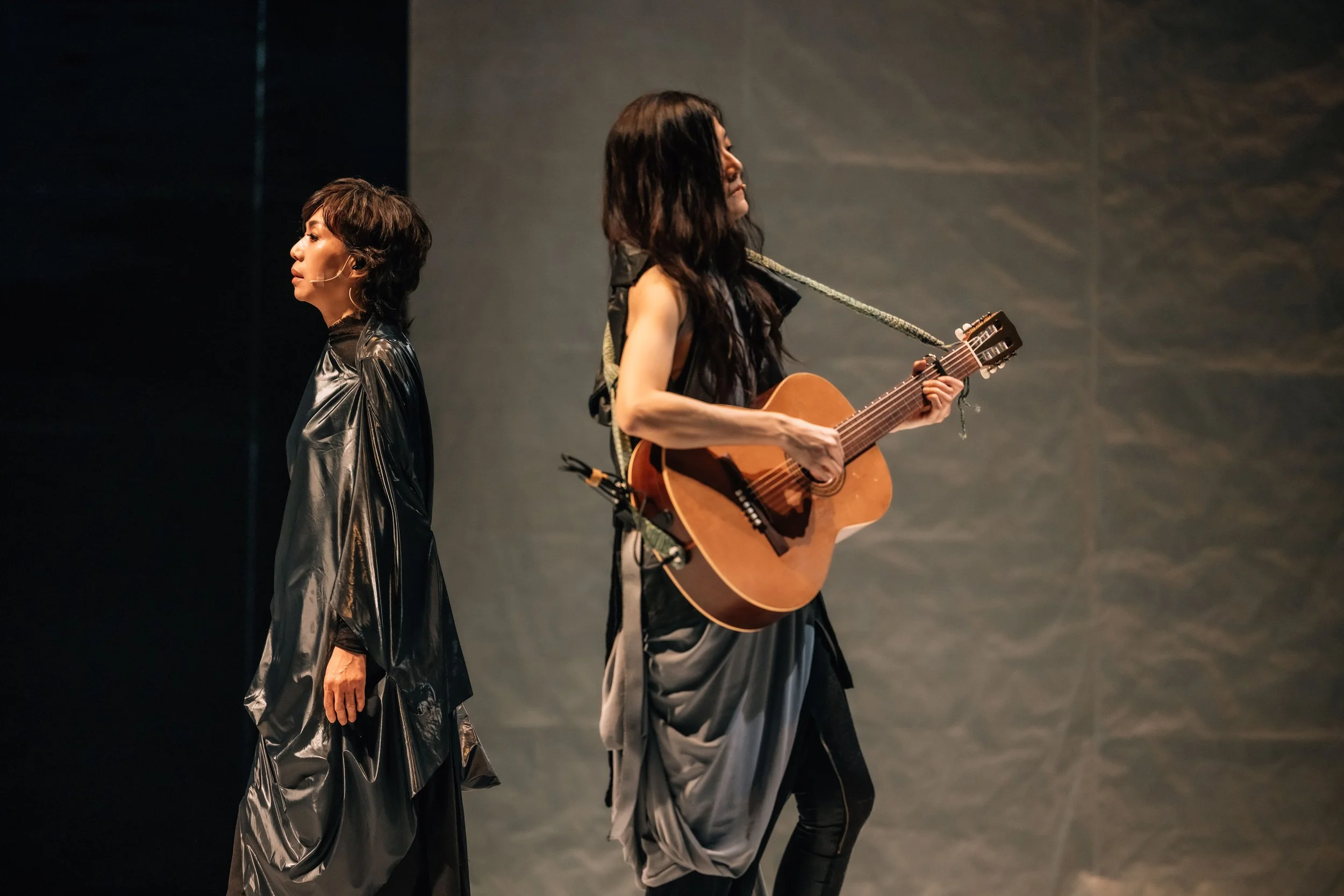
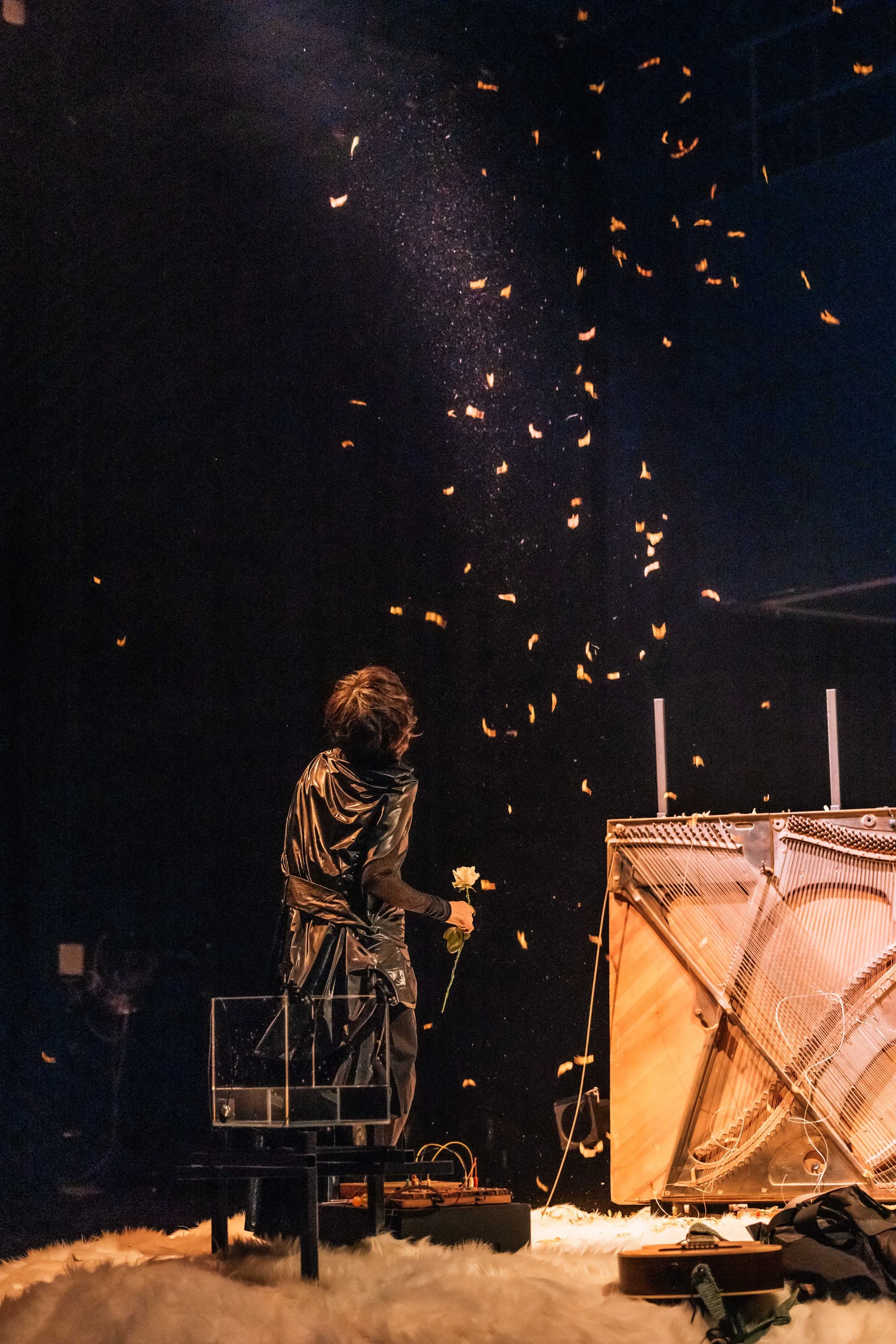
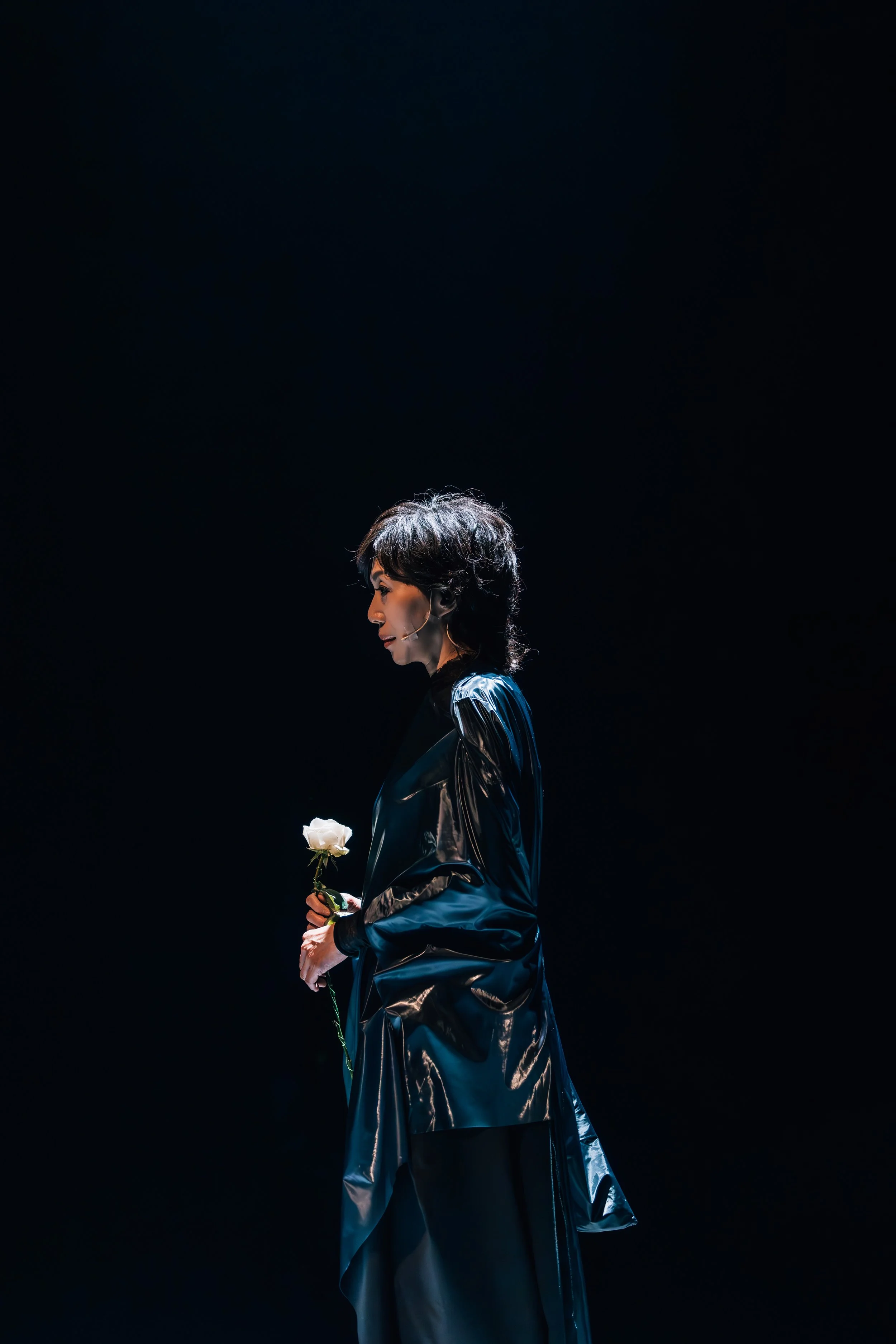
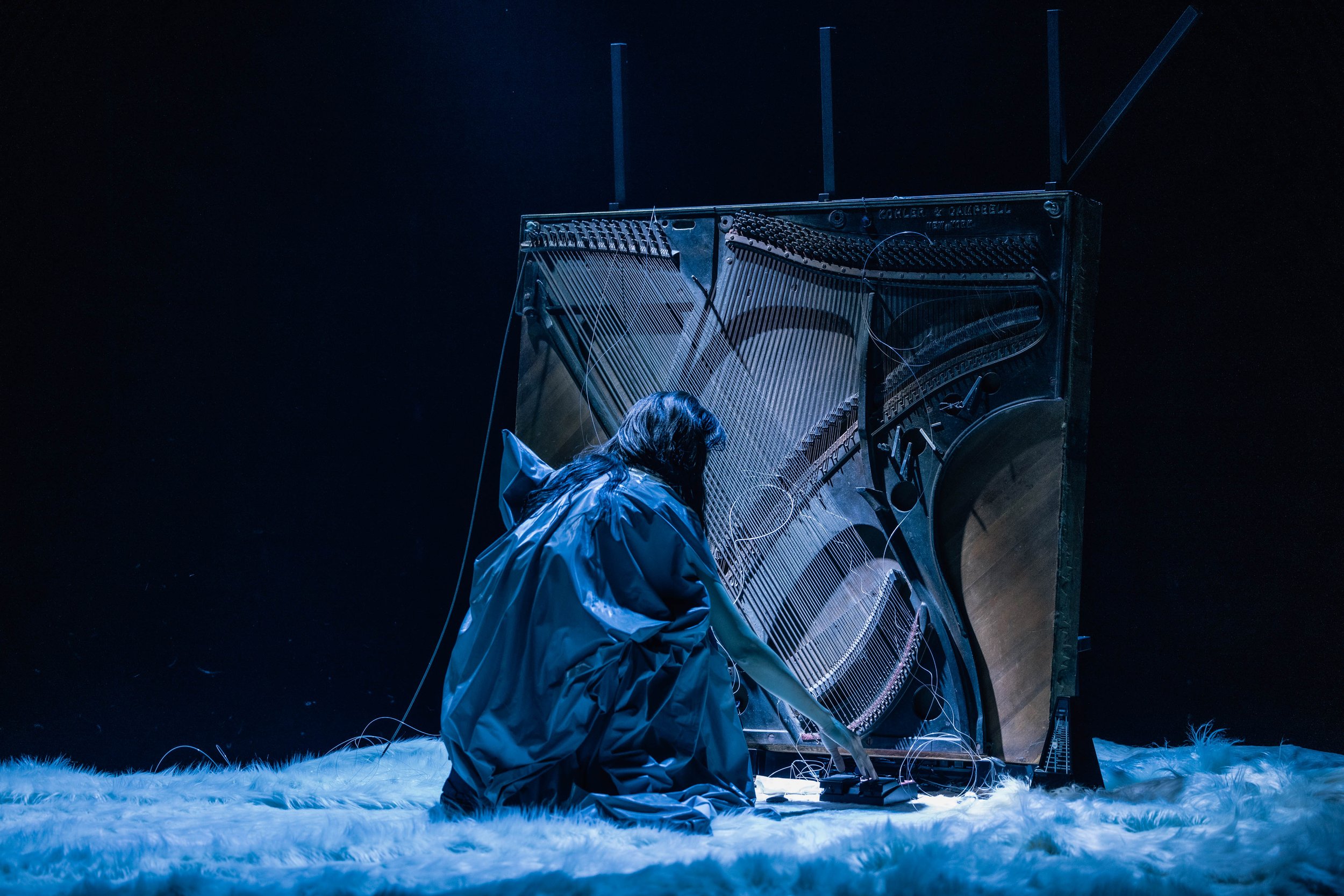
作品介紹
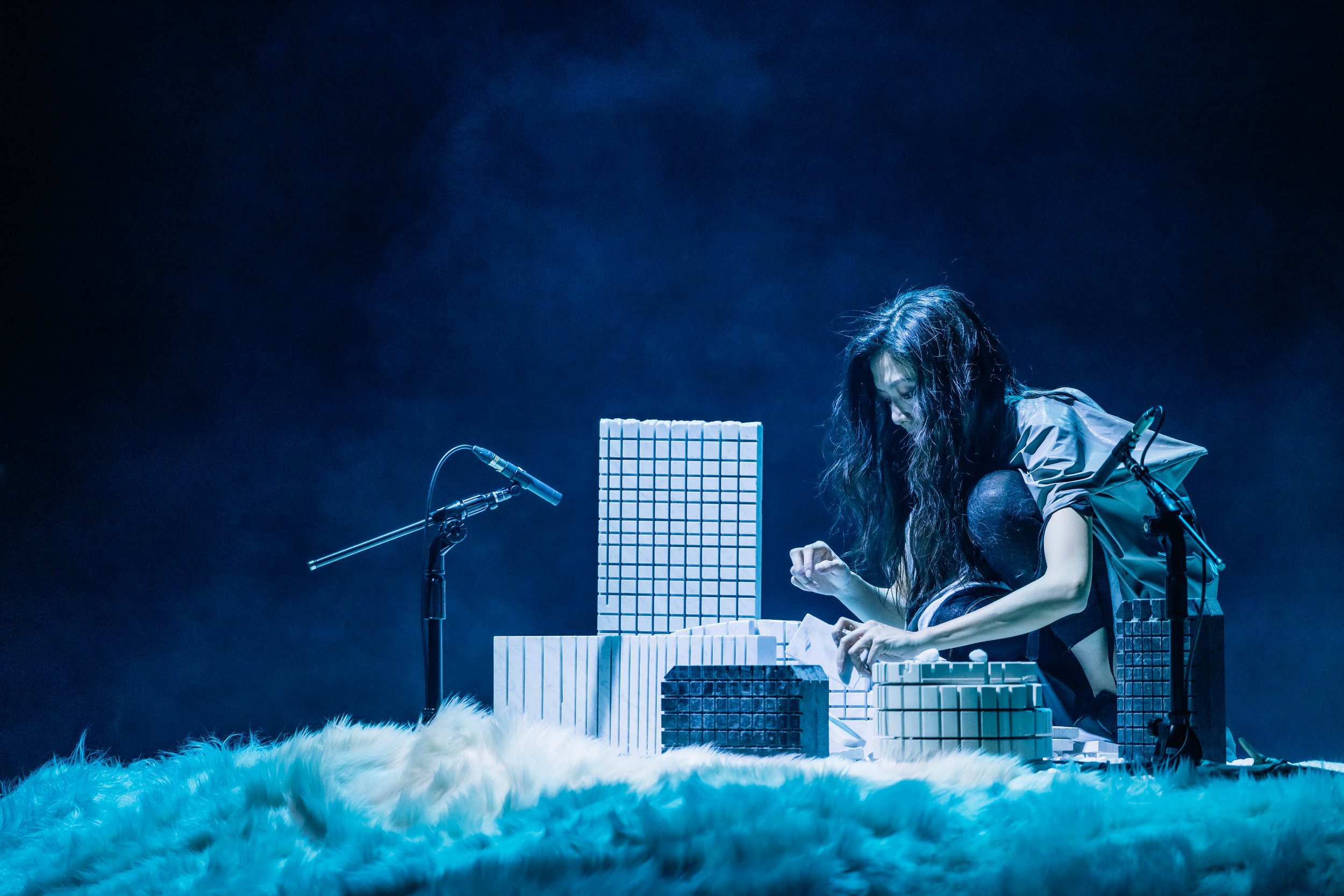
《明 Dawn to Dawn》作品靈感來自德國導演海恩納・郭貝爾(Heiner Goebbels)的《史迪夫特的事物》(Stifters Dinge)。郭貝爾擅長解構劇場形式與歷史框架,讓人得以窺見其中的張力。這幾年,王榆鈞受邀以聲響創作,分別對話日治時期的臺灣藝術史、白色恐佈時期的人權議題、國民政府遷台時期的社會生活、地理遷徙所產生的華人文化認同。促逼她思考為何要去探討那些她不曾經歷過的事件?這也使得她有一段時間在創作的虛構與真實之間產生自我認同的拉扯。
在反芻這些創作經驗後,她逐漸明白,雖然我們這個世代不曾經歷過那些時期,但卻一直活在承載歷史的橫切面上。面對內部的文化認同與外部的動盪世界,「明」隱喻我們這個世代所承接著的歷史位移。無論是個體的身份認同,集體的主體定位,持續處於缺席的「不明」狀態中。而這個時代的我們,是否總是太急欲得到答案?卻忘記以一種無前設的身體,將自己交付出去,親身感受這些過程,才能看見屬於自身的明白。
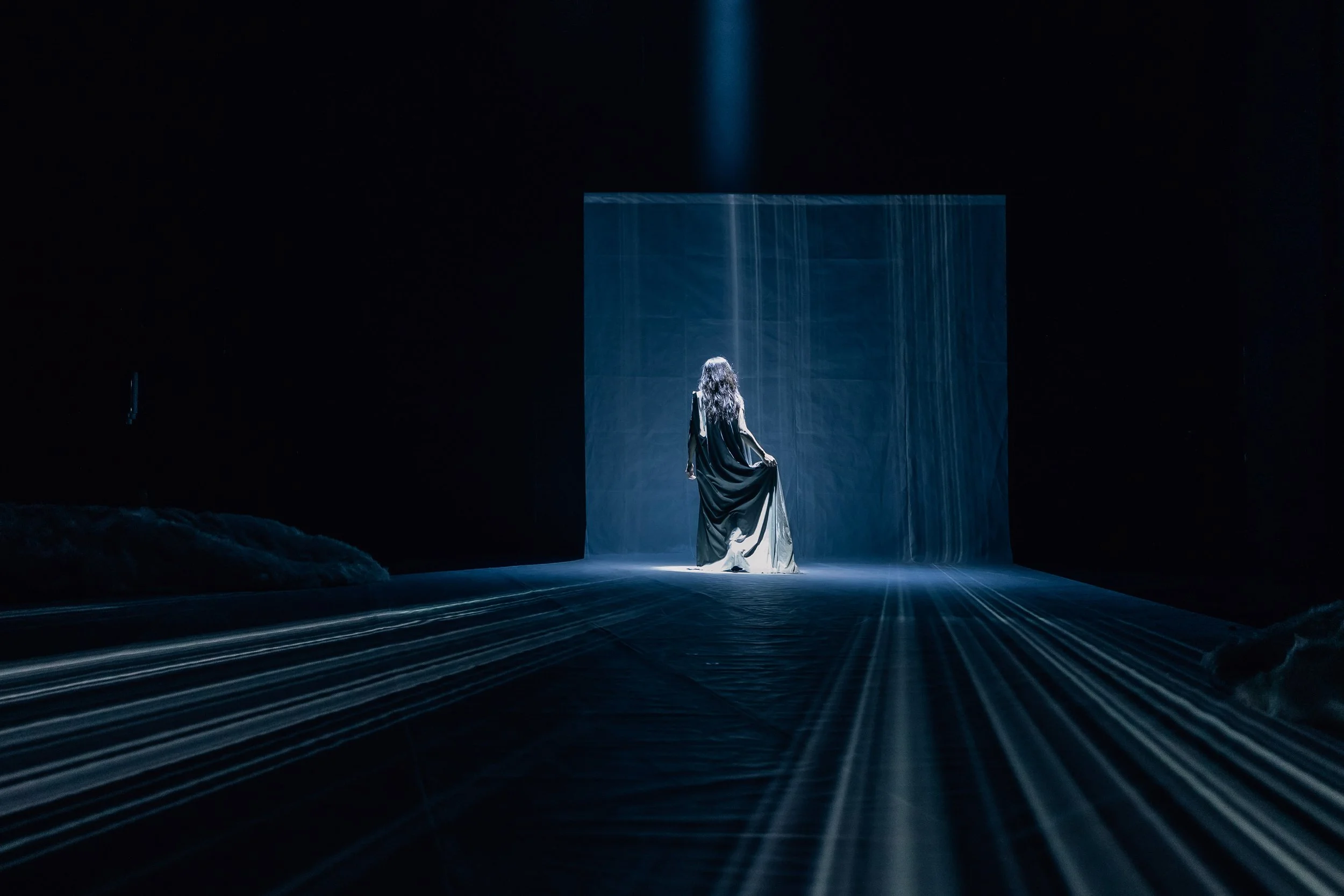
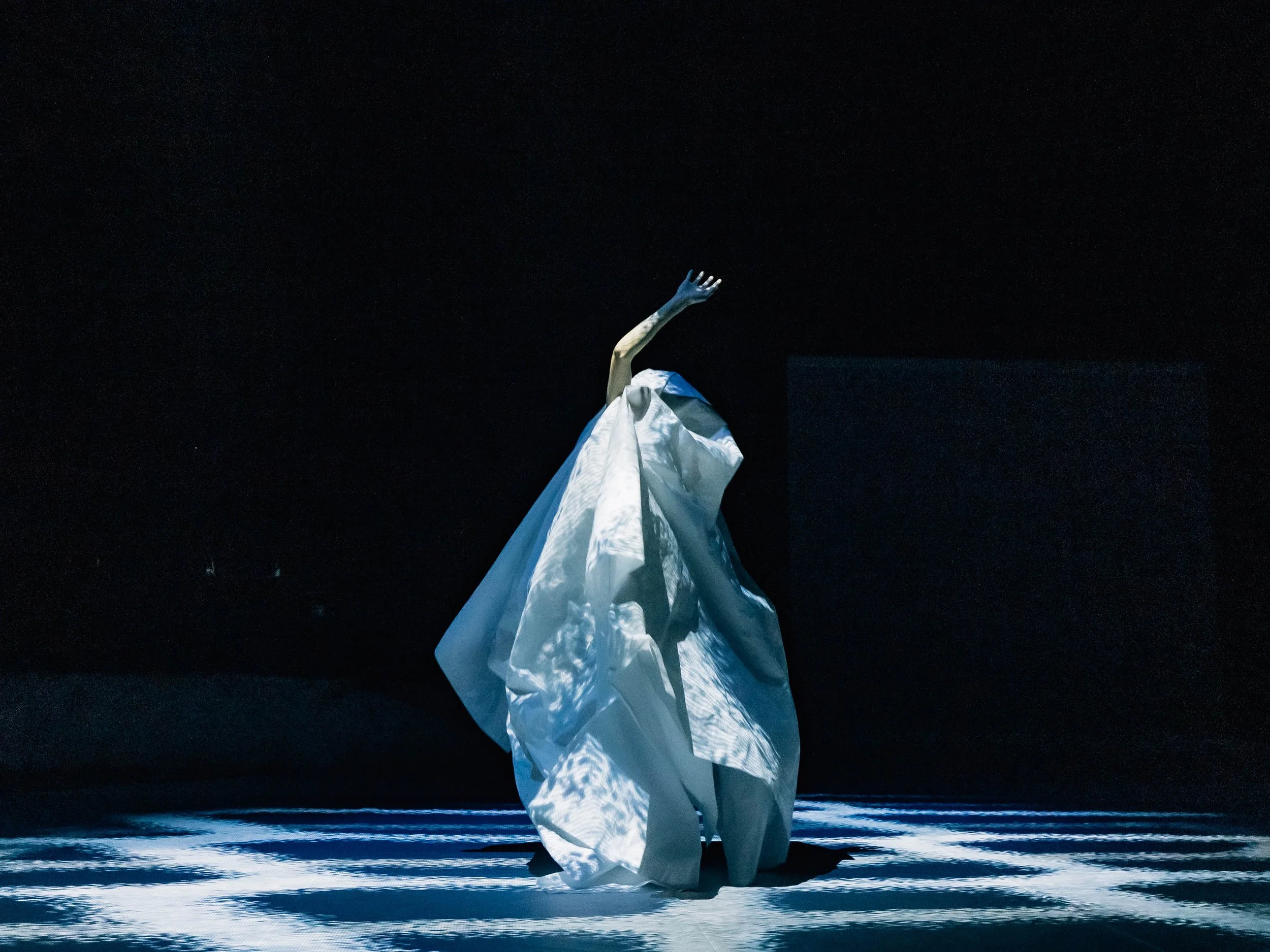
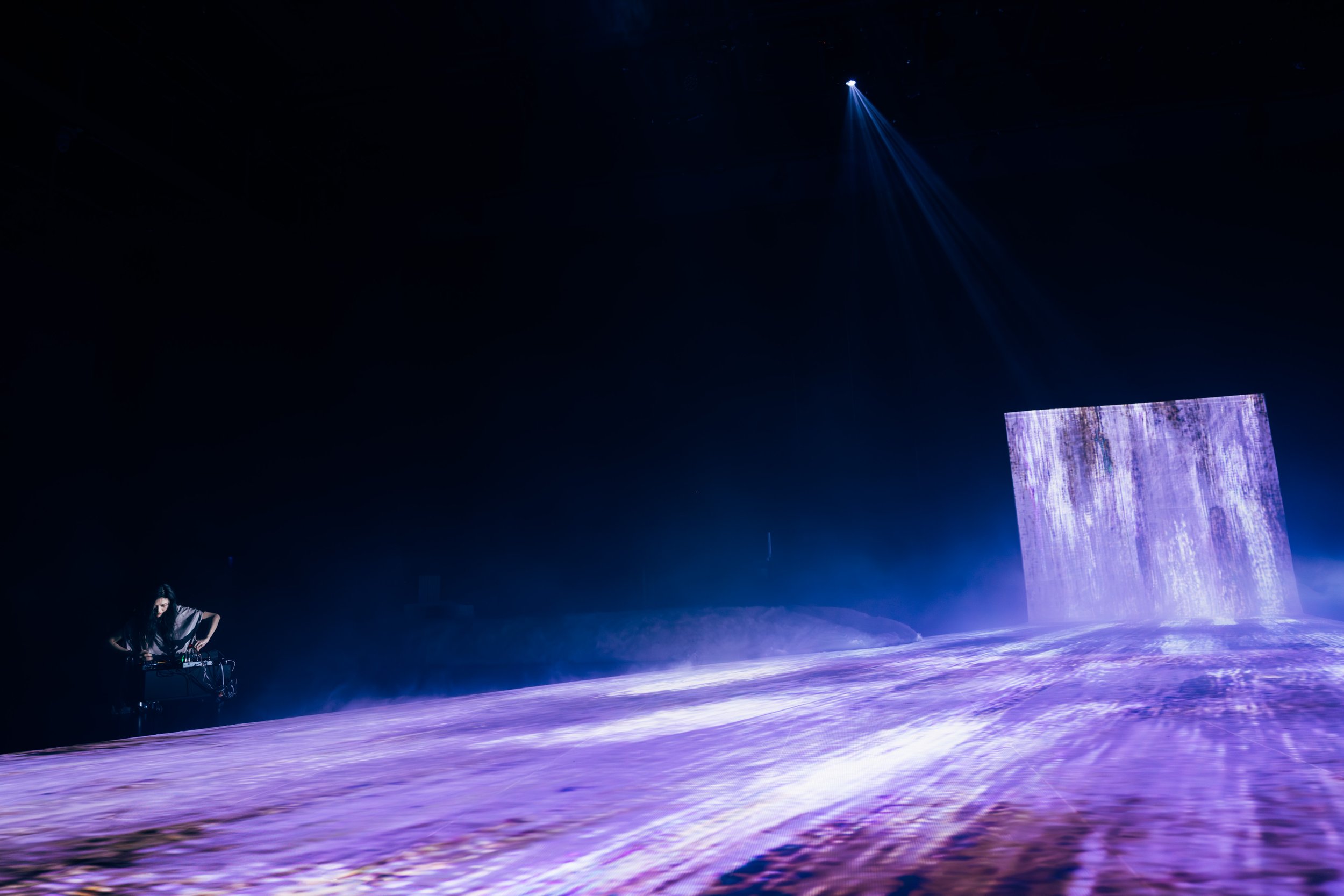
「明」這個字由日與月組成,象徵白晝與黑夜。黎明到下一個黎明,我們的日子在日與月的輪替裡,接續不斷地開展。而音樂的本質是時間,「歷時」是單一線性過去式,「乘載」作為二維切面的過去完成進行式。在《明 Dawn to Dawn》裡,並不試圖告訴你故事怎麼發展、什麼是答案。而是以音樂聲響與劇場的異質元素互滲,擴延至空間,製造五個「場」而投射多維的臨界概念:
流:是靜止亦是流動
徑:是來向亦是去向
身:是個人亦是集體
晃:是聲響亦是旋律
刻:是記憶亦是消逝
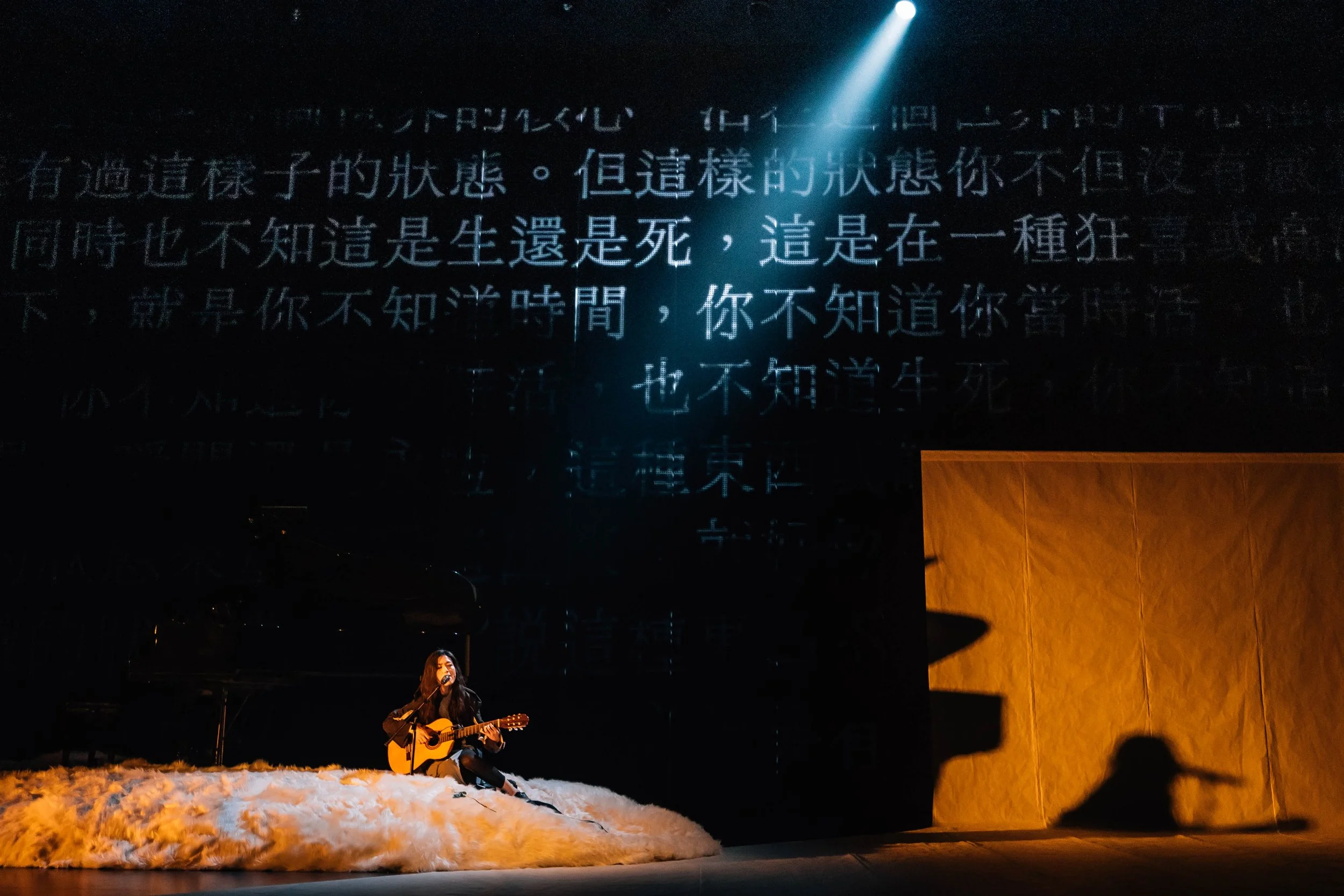
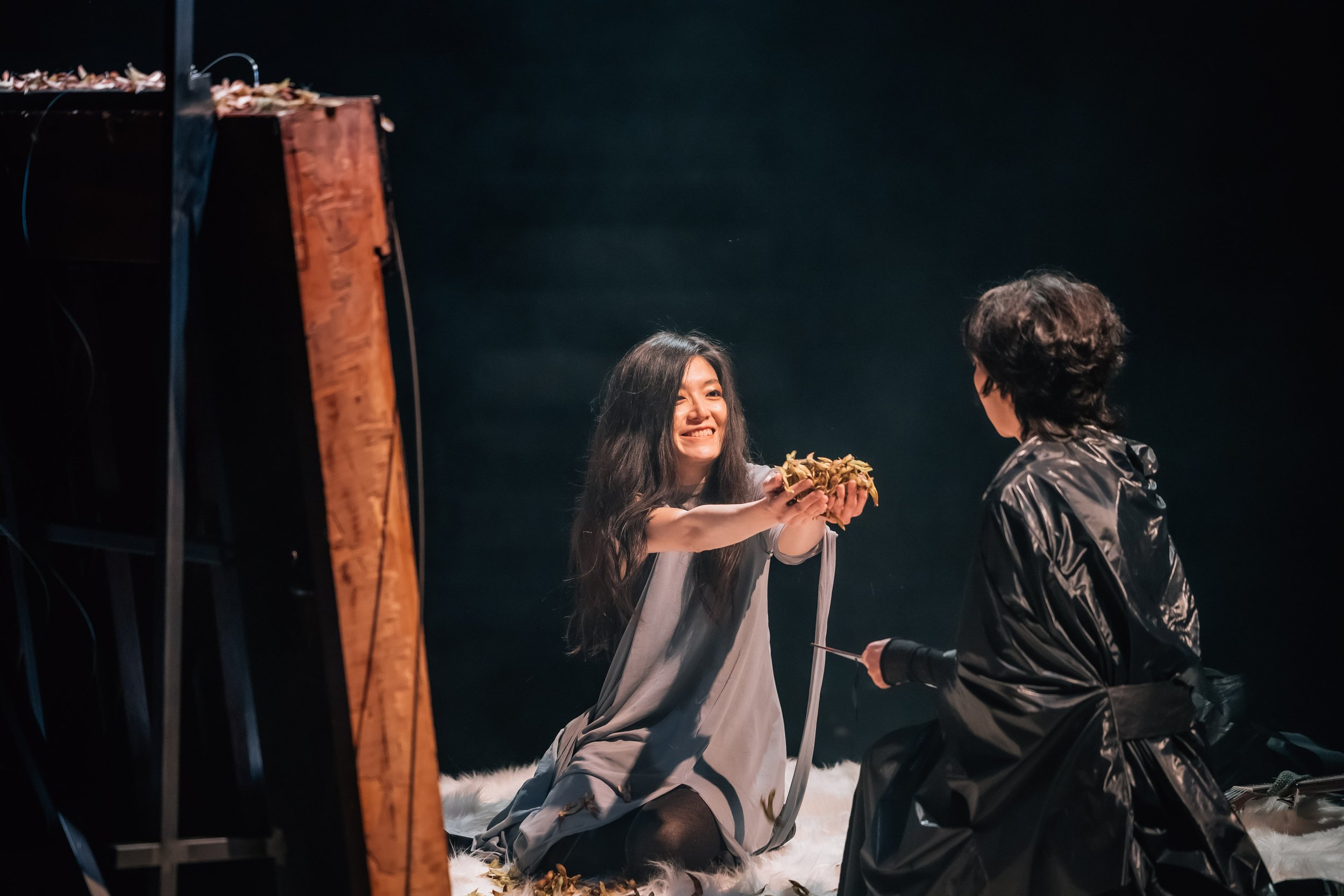
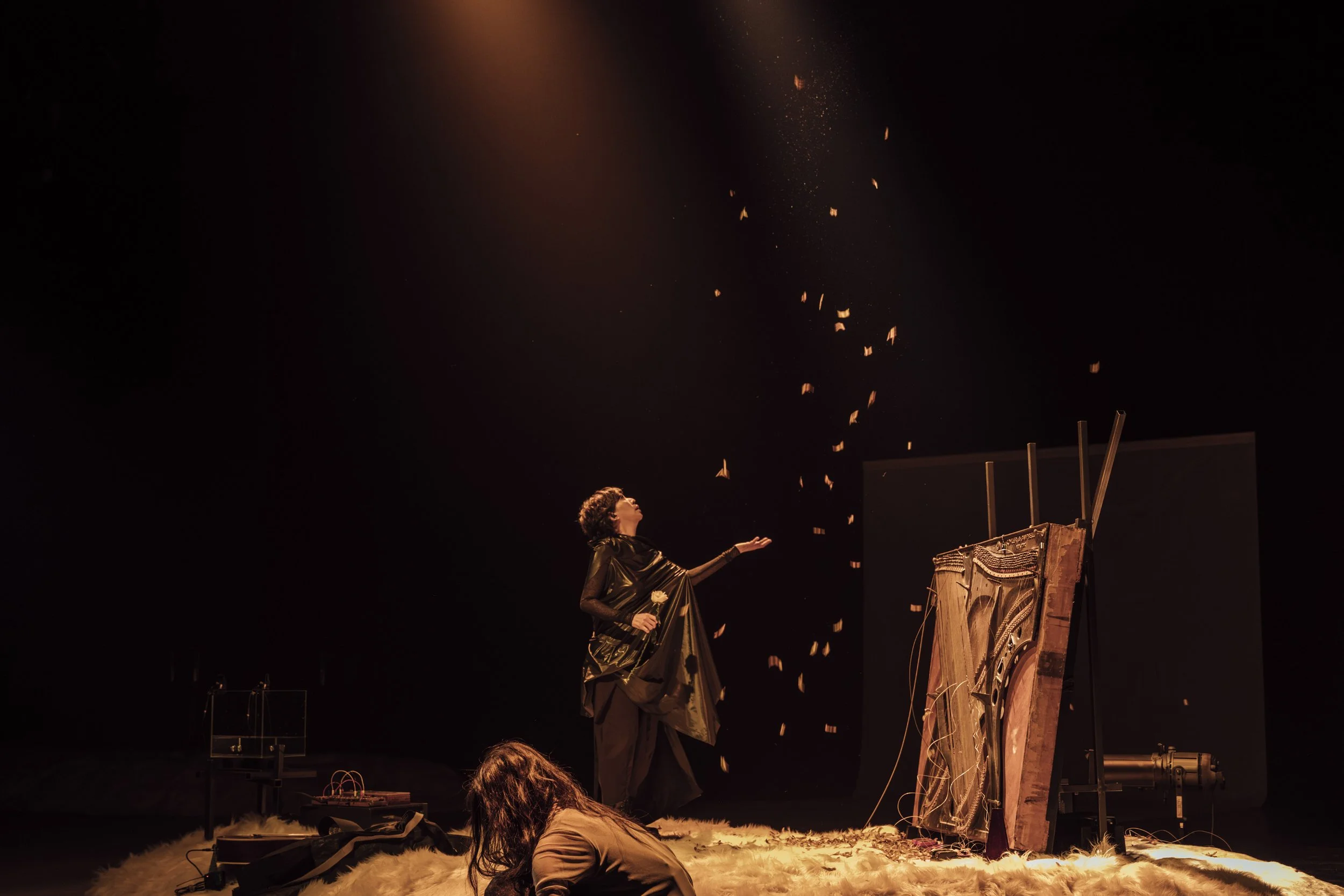
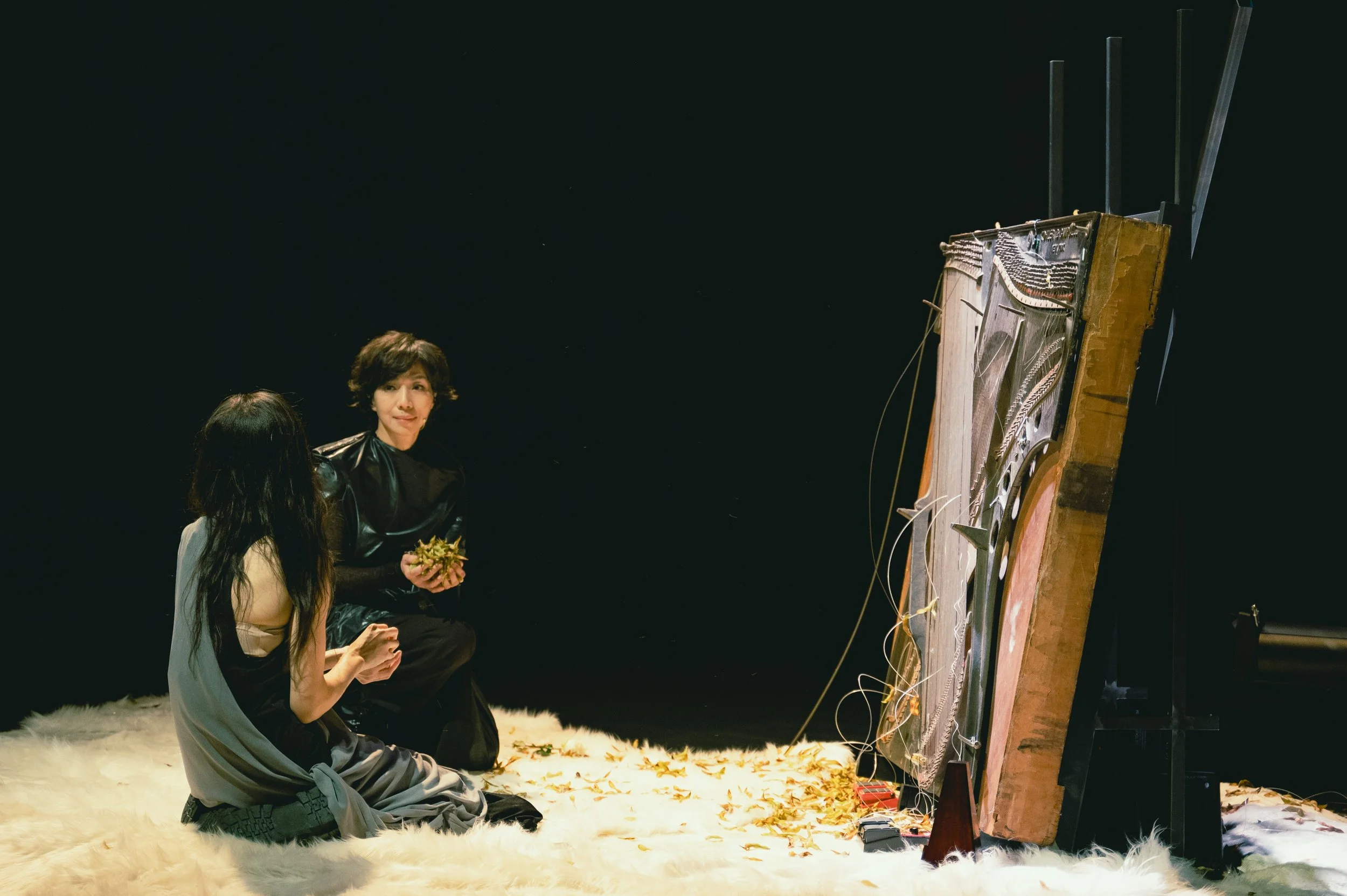
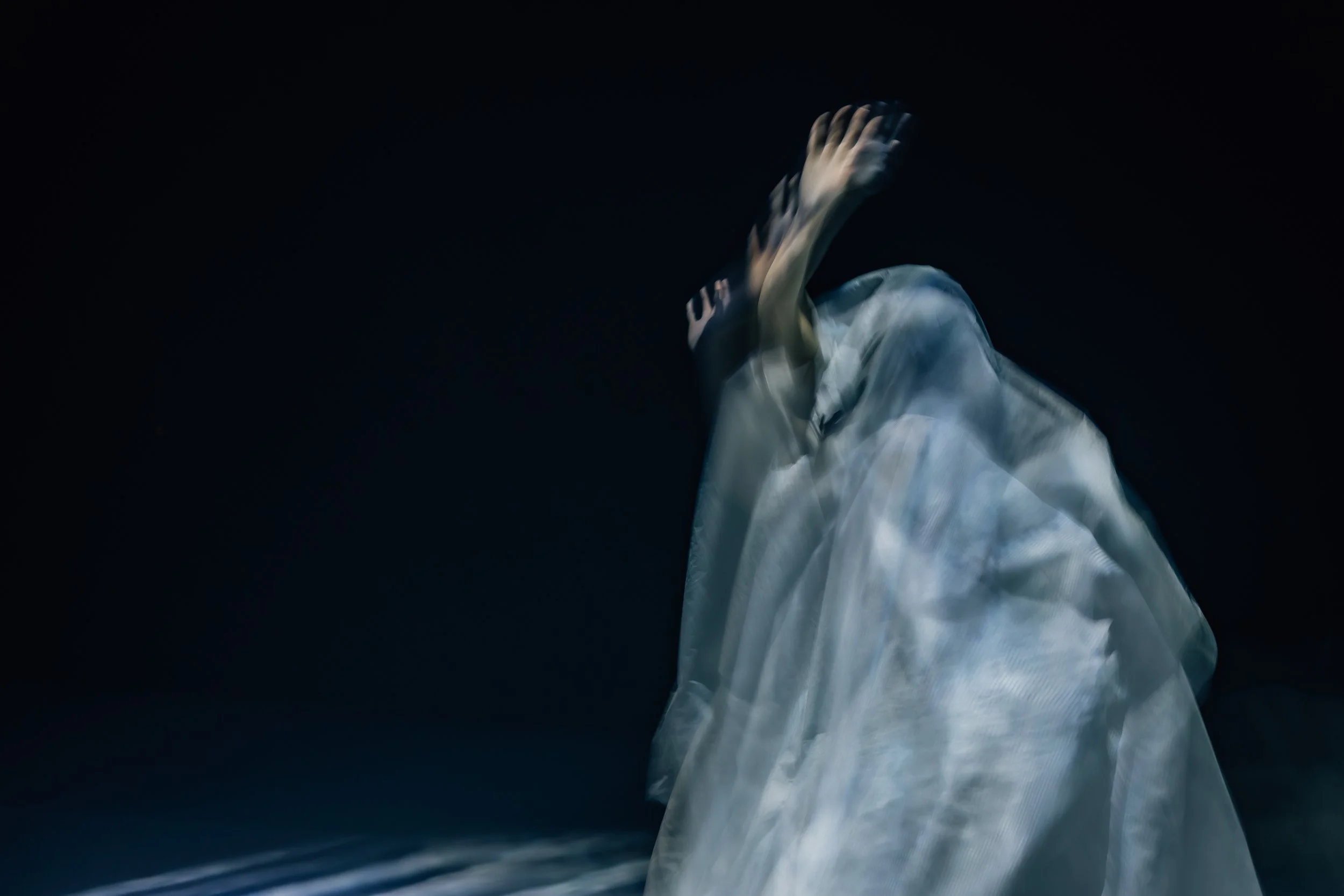
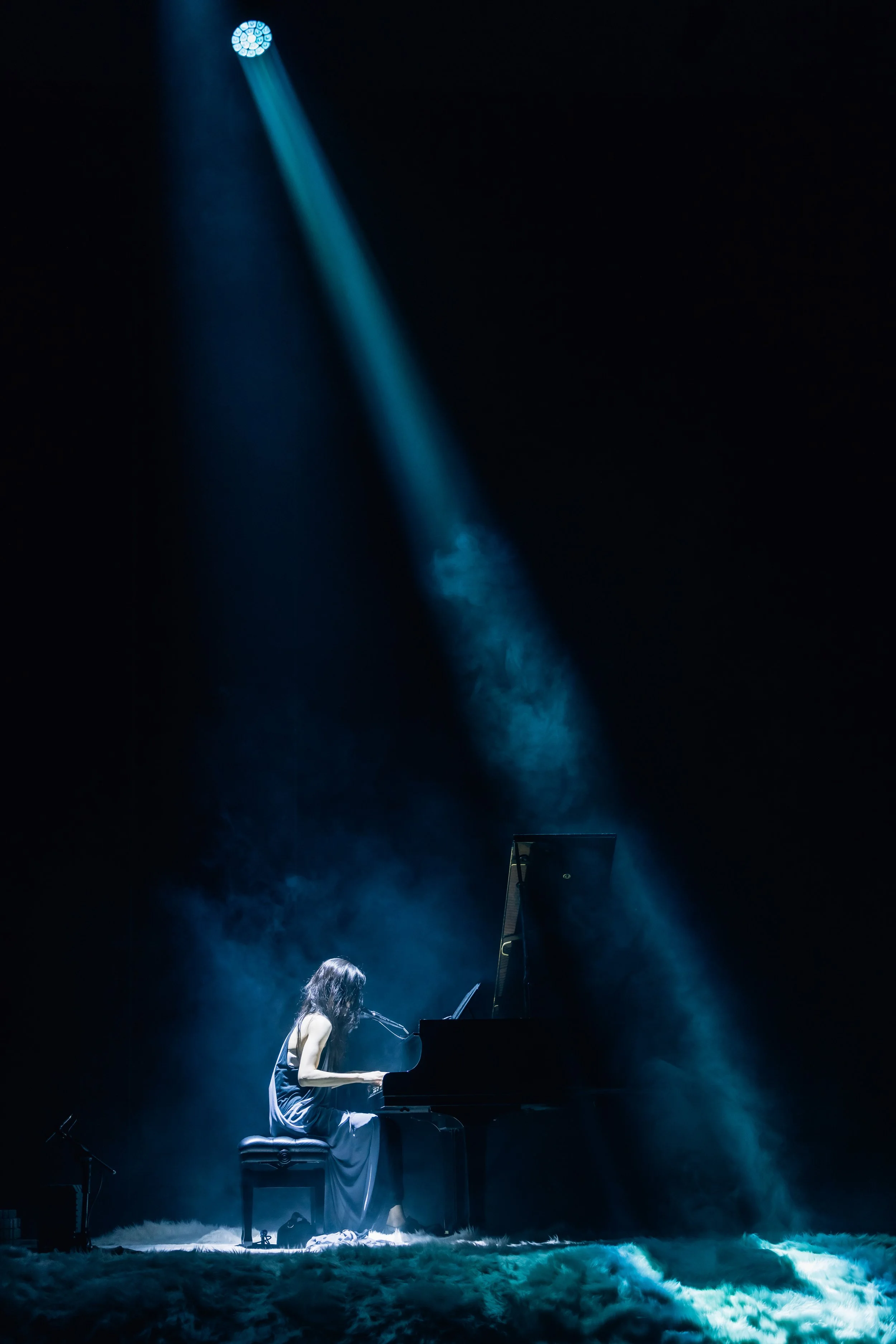
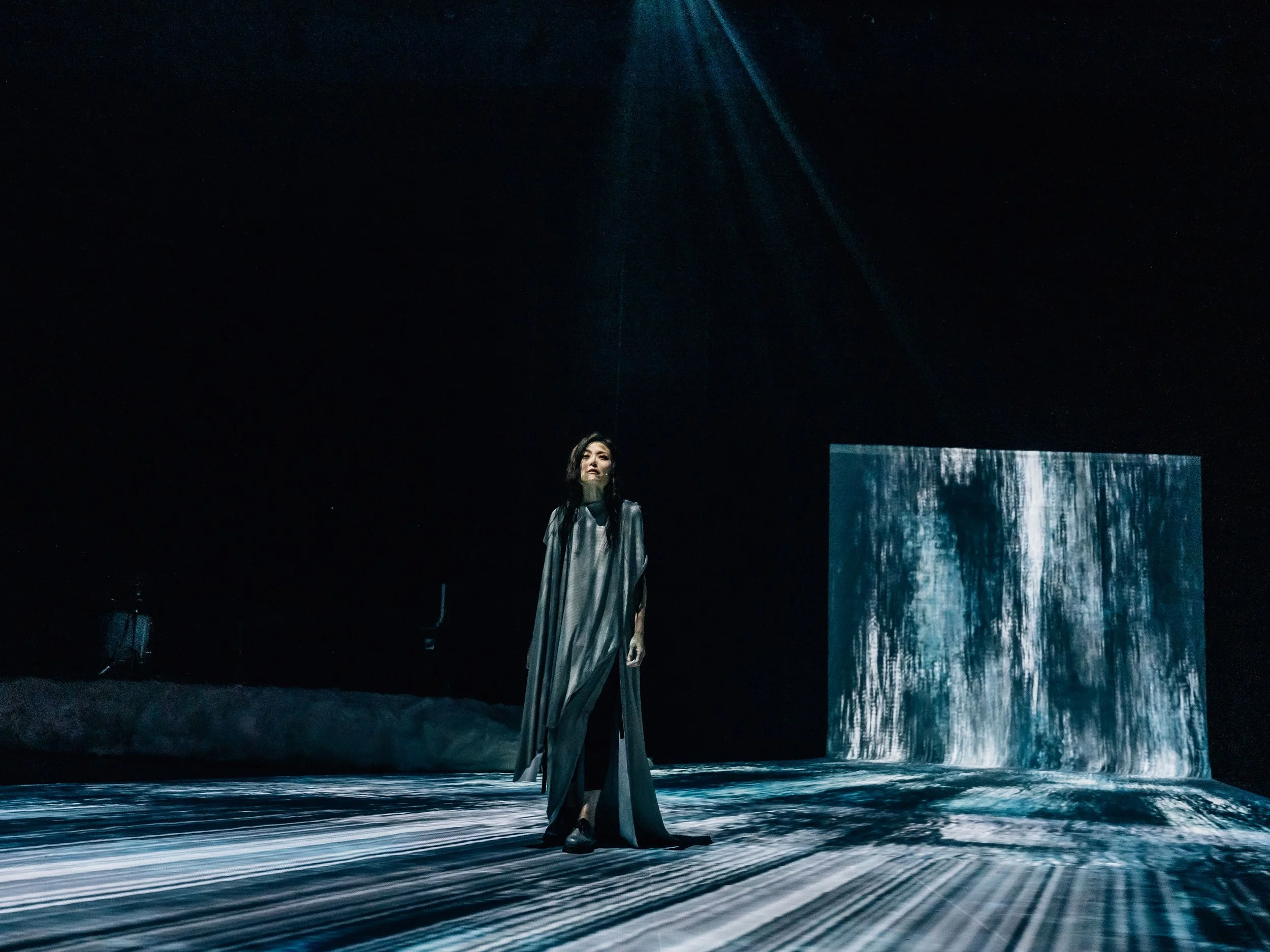
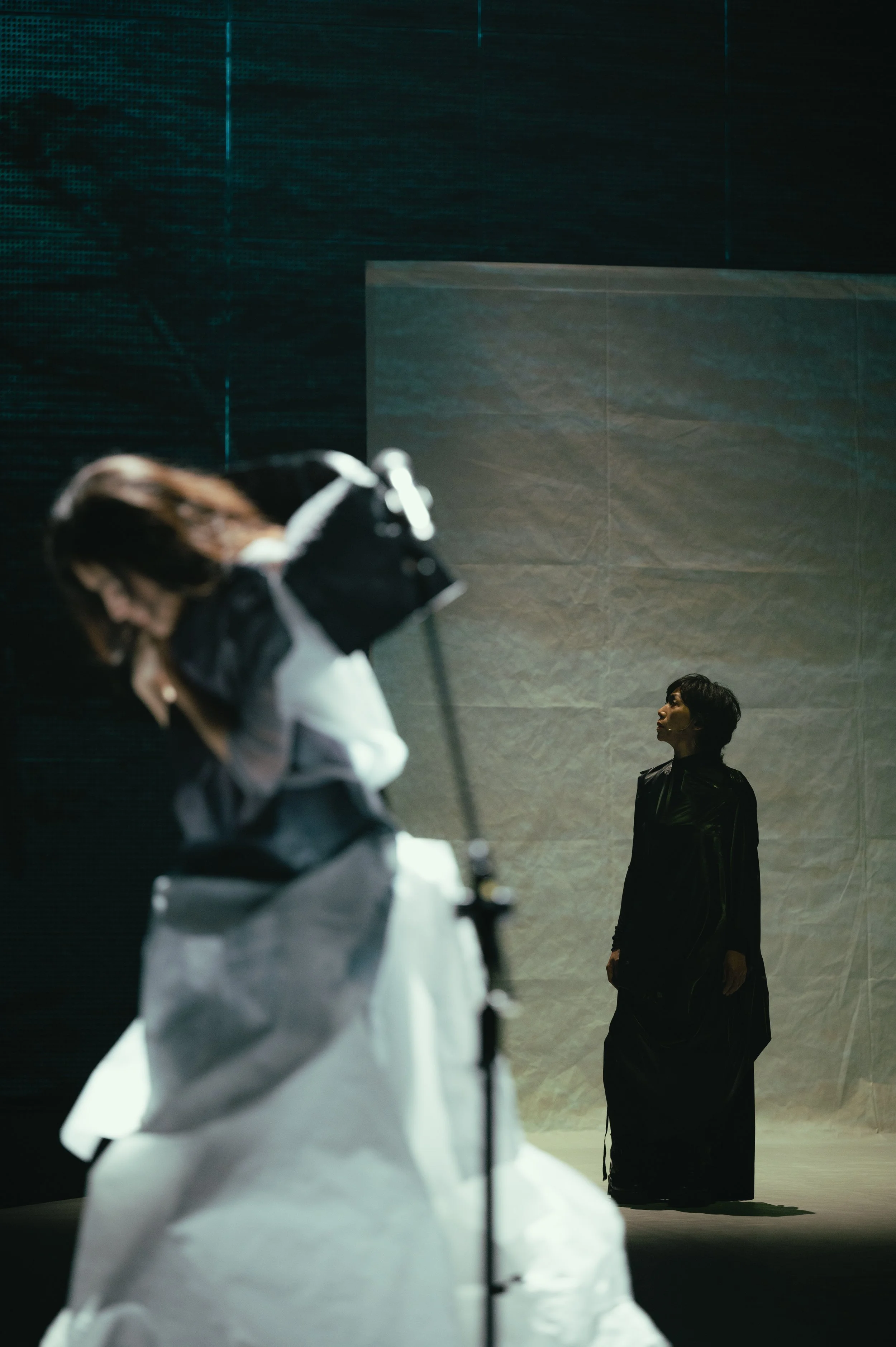
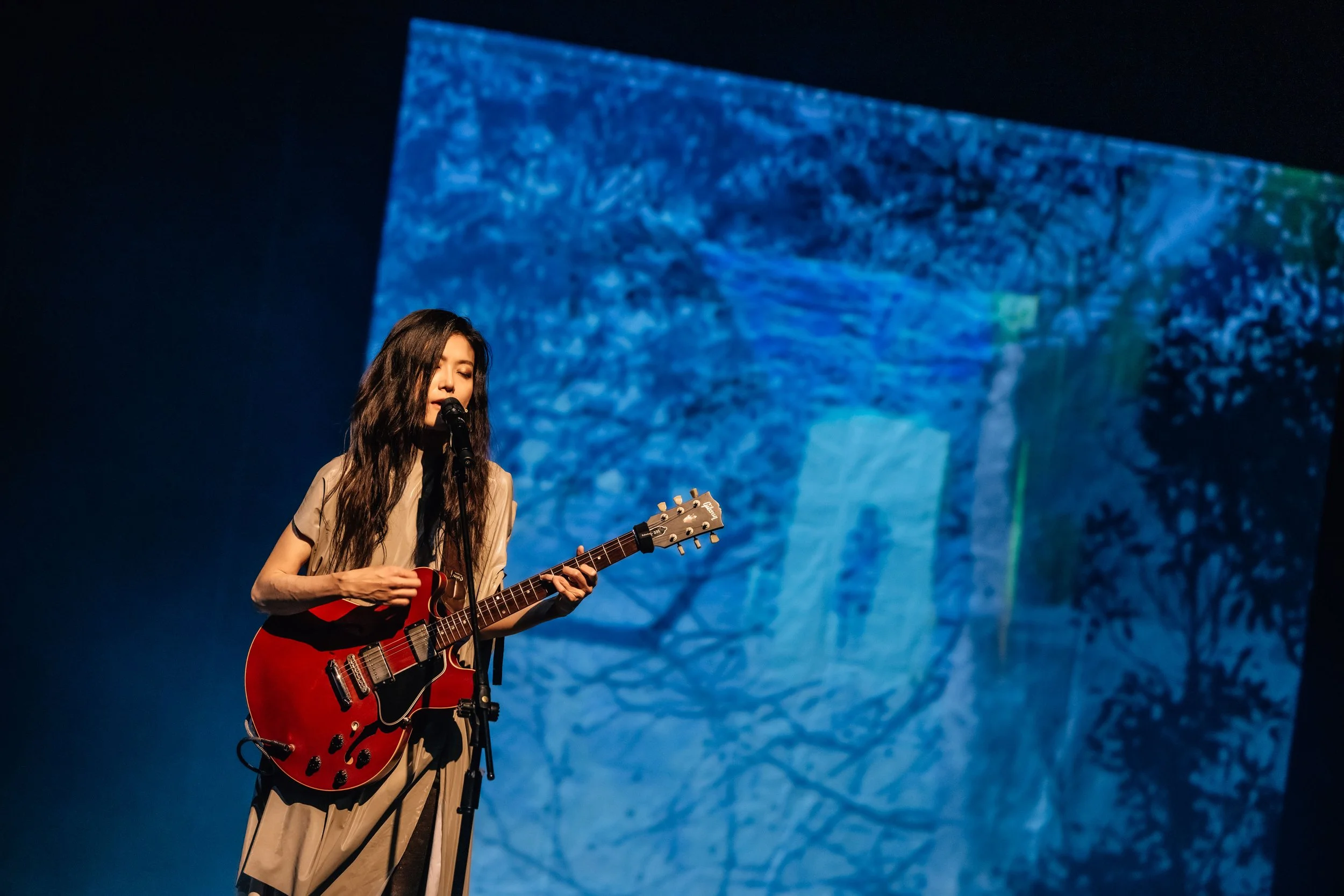
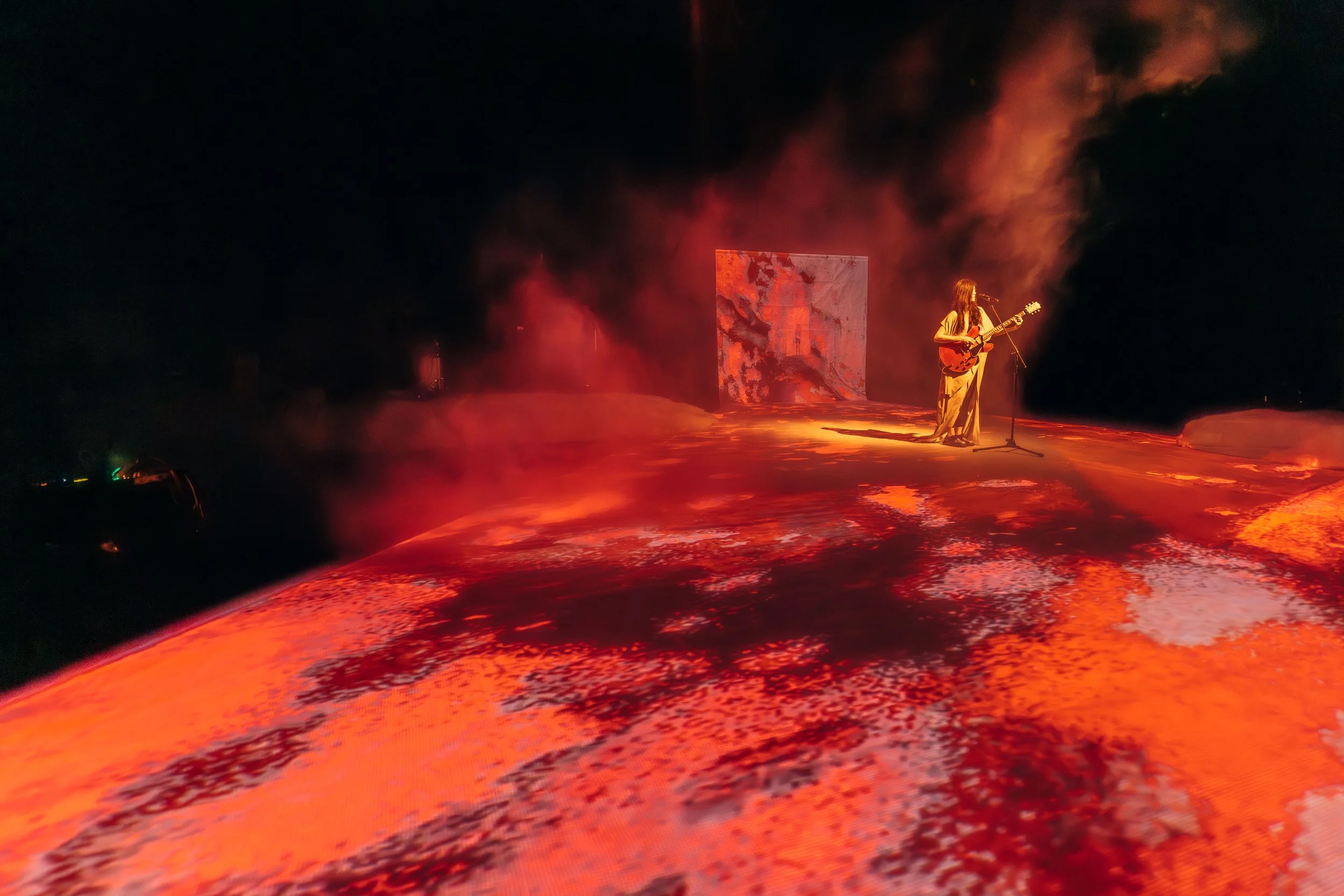
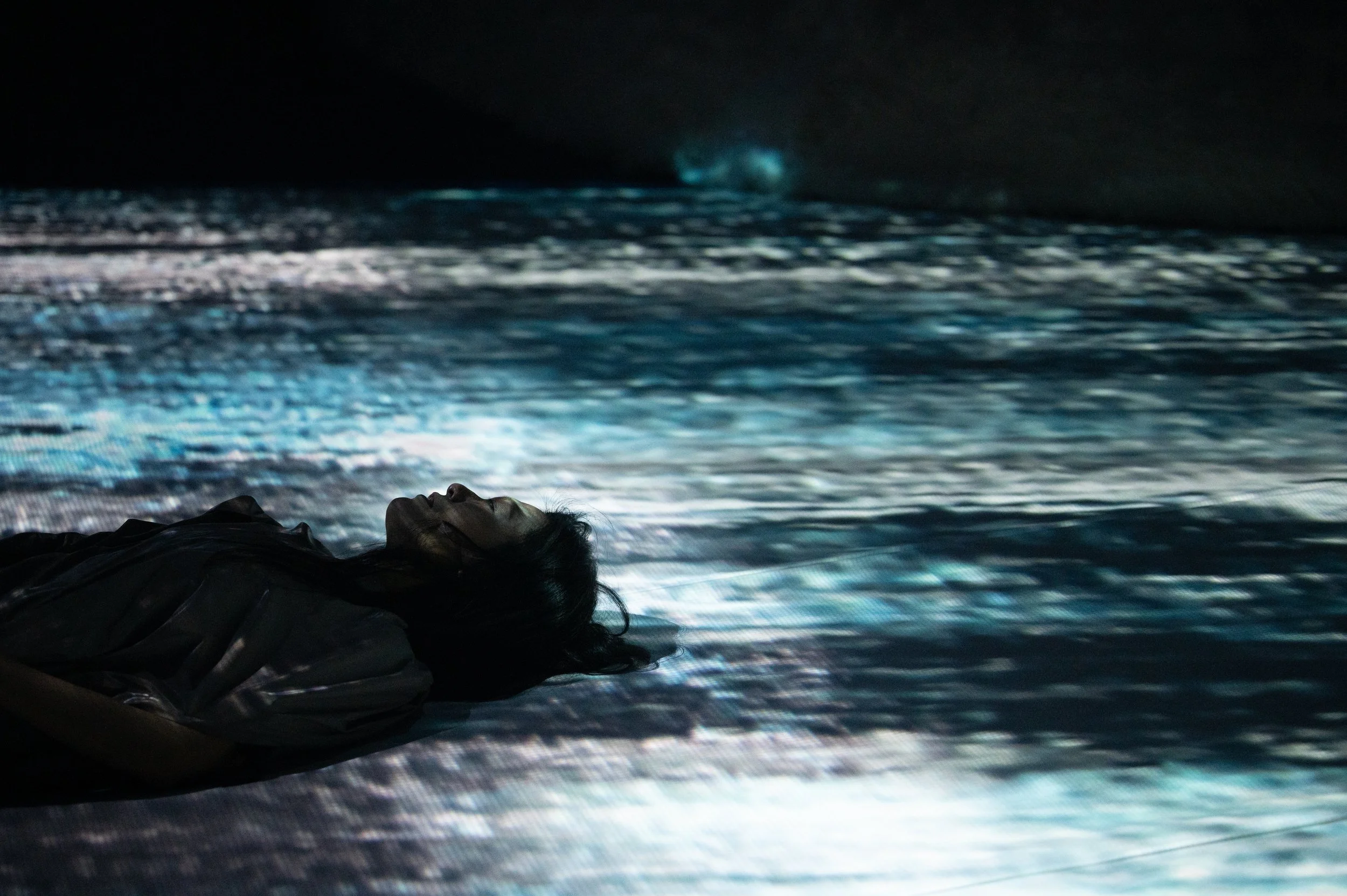
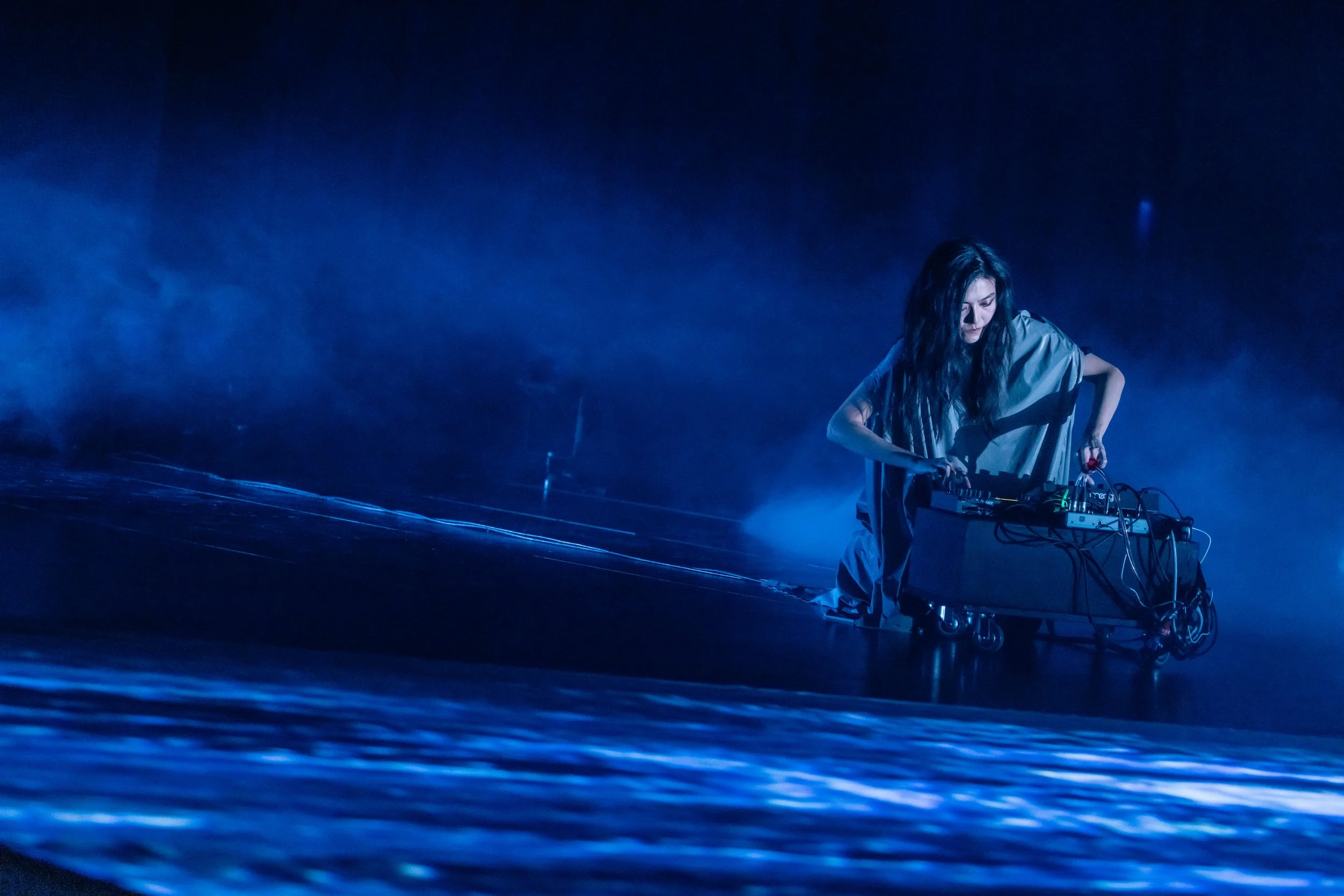
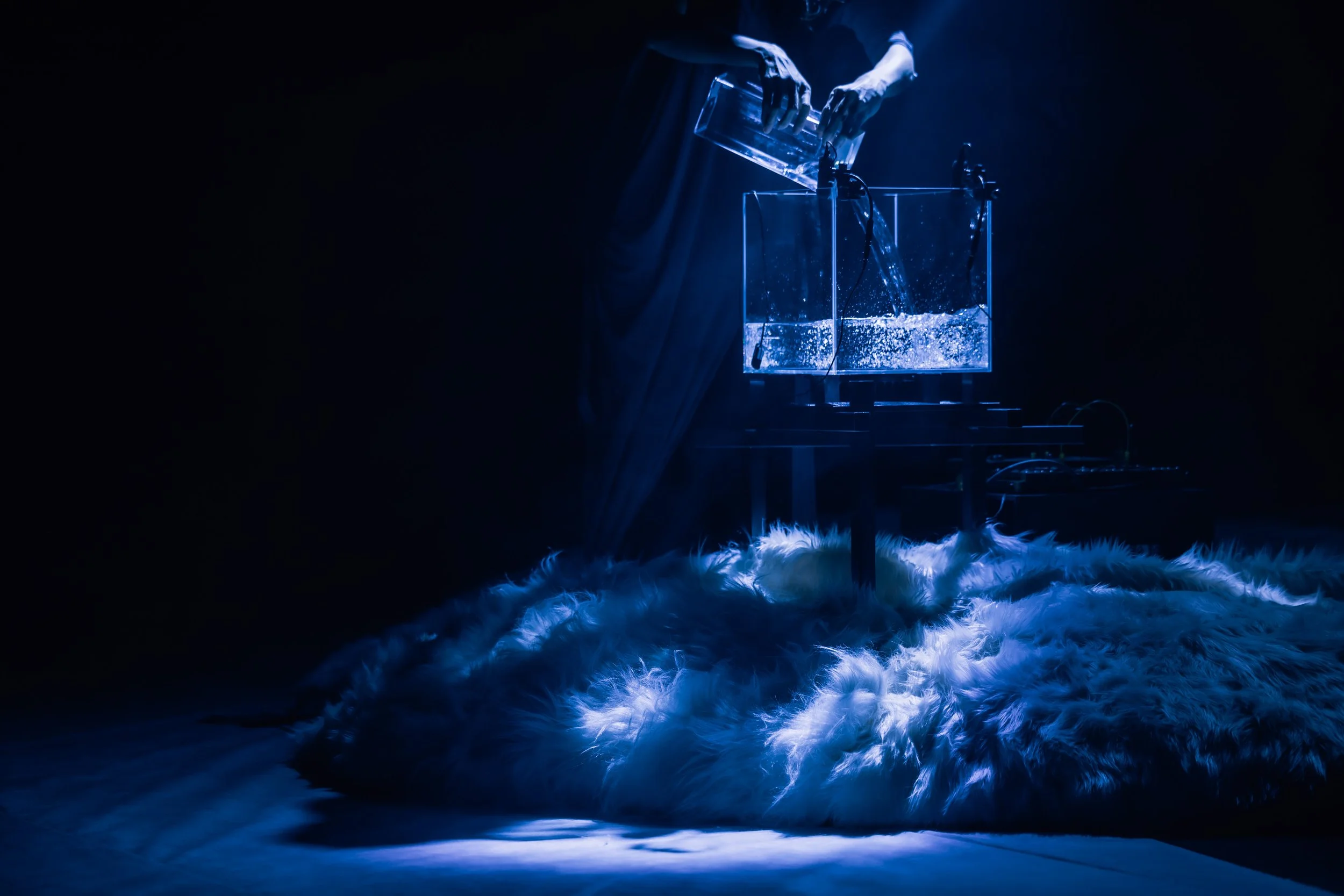
這是一齣沒有劇情的音樂劇場,大至歷史洪流中曖昧不明的主體認同,小至時代變遷下的不安的個體意識。王榆鈞讓一切付之闕如,將聲音推上舞台中央,告訴我們聲響不須文本也能傾訴。在場,沒有主角與腳本,但你可以代入你自身;在場,聲音不可見,但你可以召喚未曾察覺卻一直存在的那些;在場,你能拾取裂解的敘事碎片,拼接成自己的未完結;在場,你什麼也帶不走,你能帶走的只有你自己。而我們終將發現,與不明狀態共生,有如趨近大腦不同意識狀態的聲音波長與頻率,像呼吸般地自然律動。也只有在此刻,我們能夠共感——因為「不明」所以更「明」的世界。
About 明 Dawn to Dawn
"明Dawn to Dawn" draws inspiration from German director Heiner Goebbels' Stifters Dinge. Goebbels is known for deconstructing theatrical forms and historical frameworks, allowing us to glimpse the tensions within. In recent years, Yujun Wang has been invited to create sound works that engage with various aspects of Taiwanese history: the Japanese colonial period in Taiwan, human rights issues during the White Terror era, social life during the period of the Kuomintang (KMT) government's relocation to Taiwan, and the cultural identity of Chinese communities shaped by geographic and political migrations. These themes have prompted her to reflect on why she should explore events she did not personally experience. This has led to a period of inner tension between fiction and reality in her creative process, questioning her sense of self and identity.
After re-examining these creative experiences, Yujun came to understand that while her generation never directly experienced these historical times, they exist as part of the cross-section of history that still bears its weight. Facing internal cultural identities and an external, turbulent world, “明” (ming) becomes a metaphor for the generational inheritance of historical displacements. Whether on an individual level of identity or a collective sense of subjectivity, we constantly exist in an ambiguous state of "unknowing." In this age, are we too eager for answers, forgetting to surrender ourselves—without preconceptions—to the process of personal experience, where clarity can naturally emerge?
The character 明 (ming) is composed of 日 (sun) and 月 (moon), symbolizing day and night. From one dawn to the next, our days continuously unfold in the rhythm of light and darkness. Music, at its core, is time, with "duration" as a linear past tense, and "bearing" as a past continuous tense with a two-dimensional perspective. In 明Dawn to Dawn, the work does not attempt to narrate how a story develops or offer answers. Instead, it blends music and theatrical elements, extending into the space to create five "scenes" and project multiple critical concepts:
Flow: stillness yet movement
Path: arrival yet departure
Body: individual yet collective
Rock: sound yet melody
Imprint: memory yet disappearance
This is a music theatre piece without a narrative, ranging from the ambiguous subjectivities within the currents of history to the uneasy individual consciousness under the weight of changing times. Yujun allows everything to remain undefined, placing sound at the center of the stage to show that sound alone—without text—can articulate meaning. In the scenes, there are no protagonists or scripts, yet you can immerse yourself in the space. In the scenes, sound is invisible, yet it summons the unnoticed but ever-present. In the scenes, you can collect fragmented narratives and piece together your unfinished story. In the scenes, you leave with nothing—except yourself. Eventually, we realize that coexisting with the state of “unknowing” is akin to resonating with the sound waves and frequencies of consciousness, rhythmically as natural as breathing. Only in this moment can we truly connect—because it is through “unknowing” that the world becomes all the more “clear.”